


There’s no place like home. This is why Helping Hands Home Care offers up to 24-hour in-home services for seniors throughout the UK. Ageing in place allows older adults to enjoy their later years of life with dignity and grace. In-home care also helps seniors maintain their independence while receiving the high-quality care they need and deserve.
Having the right care in place as you age is crucial for both your mental and physical well-being. Not only does quality home care give your family peace of mind, but it also guarantees that you’re an active participant in making important decisions regarding your care. All while remaining in the comfort, safety, and familiarity of your own home.
If you live in the UK and are considering in-home care services for you or your loved one, Helping Hands may have the type of services you’re looking for. Keep reading for an in-depth Helping Hands Home Care Review so you can make an informed decision about your future.
About Helping Hands
Helping Hands offers adults of all ages and stages of life expert in-home care and support that allows them to live safely and independently at home. The team at Helping Hands works directly with the Service User and their family members to create a bespoke care plan based on the person’s individual needs and unique circumstances. No two plans look the same. Helping Hands prides itself on offering personalised care and support that caters to every individual’s preferences and circumstances.
Helping Hands has been a private home care provider for over 30 years and maintains family values at its core. What started as a small family business in Warwickshire in 1989, Helping Hands has grown to become one of the most well-known and well-respected home care providers in the UK. Helping Hands understands the importance of taking care of loved ones as they age, and it’s these values that guide everything the company does and stands for.
Helping Hands will not only provide all of the services your family needs but help guide the decision-making process. Choosing to have a caregiver enter your home is not an easy decision to make. But Helping Hands’ family-focused approach can help simplify this process and make it less stressful for all those involved. The staff at Helping Hands will offer support and assistance as much or as little as you want and is dedicated to offering personalized care in a compassionate and dignified manner.
Here are a few other features that set Helping Hands apart from other in-home care services in the UK.
Centrally-Managed Services
All carers employed by Helping Hands are trained, qualified, and motivated. They receive company benefits plus holiday pay and are replaced with a comparable caregiver in their absence. All caregivers who enter the home are well-informed and familiar with your unique situation and needs, so all patients receive seamless, uninterrupted care. Local caregivers have full access to a large infrastructure of support from the company’s dedicated, centralized support office.

Most Helping Hands management team members live in the local area and have worked their way up through the company. Starting as a caregiver gives the management team first-hand knowledge and insight into the basic foundation of caregiving. This deep understanding makes it easier for management to address any unforeseen issues and guide caregivers while preserving the company’s core values.
All caregivers at Helping Hands are highly trained and encouraged to develop their skills using the same accredited learning program. This ensures that all caregivers are trained using the same format and deliver the same level of care that patients have come to expect from Helping Hands, regardless of the circumstance or location.
Fully-Regulated Services
All of Helping Hands services are regulated by the Care Quality Commission (CQC) in England and the Care Inspectorate in Wales and Scotland (CIW).
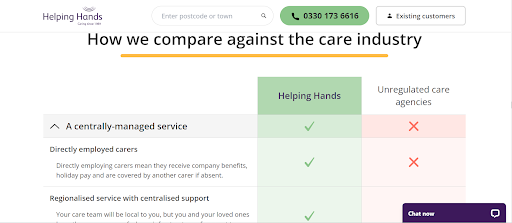

Helping Hands undergoes routine audits and independent inspections to provide clients with peace of mind that all caregivers are required to deliver safe and responsive service. All caregivers are fully vetted before being assigned to a case. They also undergo an extensive recruitment process, including DBS checks (Disclosure and Barring Service) and standard training.
Helping Hands complies with all regulatory standards to maintain good standing and provide a high standard of care at all times. Training for all caregivers is in line with the Care Certificate. This nationally recognized standard allows them to work safely, unsupervised, with all patients, regardless of their needs or the level of care required.
Starting Your Journey with Helping Hands
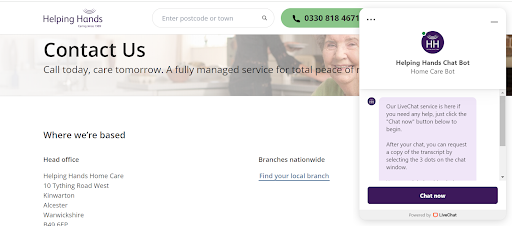
Finding the care you need on Helping Hands is fairly easy. The quick three-step process includes a free home care assessment and help building a bespoke care plan. You can also utilize the live chat feature on the website to ask specific questions and make certain enquiries. Here are the 3 basic steps toward finding a qualified and compassionate home care professional at Helping Hands.
Step One: Connect with the Helping Hands Team
The fastest way to contact someone from the Helping Hands team is via phone. Experts are available to answer your questions and guide your journey by calling 0333 060 4866. You can also start a conversation with a team member using the live chat feature.
Step Two: Get a Free Home Care Assessment
After asking a few questions and gaining a better understanding of your needs, a local Helping Hands manager will offer further evaluation of your requirements and learn more about the type of care you need.
Step Three: Create a Bespoke Care Package
Every patient’s care plan is unique to their specific needs. A qualified member of the Helping Hands team will help design a bespoke care plan that supports your needs and preferences.
The Type Care Offered by Helping Hands Home Care
The type of care you require or prefer will determine the final cost and the care schedule you receive. Here are some of the most popular types of care offered by Helping Hands.
Live-In Care
For those in need of around-the-clock care and attention, Helping Hands offers 24-hour live-in care services. This type of care is best suited for individuals with the following conditions:
- Advanced dementia
- Age-related frailty
- Living alone
- Physical disabilities
- Palliative needs
- Living in a location that’s far from friends and family
Live-in care provides around-the-clock care from a dedicated caregiver who lives with you in your home and is able to lend a helping hand day or night. Not everyone has a family member or loved one who lives close by or has the availability to provide 24-hour assistance. That’s why Helping Hands’ live-in bespoke care accommodates your individual needs, routines, and preferences. Now, your loved ones can focus on visiting, creating memories, and spending quality time together whenever possible.
Helping Hand’s live-in care is provided by expertly trained and compassionate caregivers in the comfort of your own home. Caregivers offer both companionship and physical assistance with everyday tasks. All of Helping Hand’s team members must possess a strong work ethic and empathy. Helping Hands takes extra care in selecting caregivers that complement the patient’s likes, dislikes, interests, and personality.
Once a caregiver is selected, they won’t change. Helping Hands strives to keep employee turnover low and guarantee that once a patient is paired with a caregiver, this relationship is fostered through consistency. The carer will move into your home in order to support you both day and night. This includes giving family members a break, helping with daily duties, and offering companionship. Live-in care is also appropriate for those suffering from ailments or recovering from an injury or surgery who need hands-on assistance but don’t require constant care.
Live-in care by Helping Hands is about more than just physical assistance. Carers also provide valuable and meaningful companionship. Many patients have minor issues and limited mobility, making it difficult to perform daily tasks, including washing, dressing, and preparing meals. In addition, all caregivers are trained to provide emotional support and conversation, both of which can reduce the patient’s risk of developing depression or experiencing feelings of isolation or hopelessness.
Other benefits of using Helping Hands live-in care include
- Over 30 years of experience providing physical and emotional support
- Fully-managed services
- Patient-focused support and bespoke care
- Continuity of care and consistent care from a designated caregiver
- Expertly trained caregivers
- Patients and their loved ones are treated like family
Hourly Visiting Care
Not all patients or conditions require around-the-clock service. That’s why Helping Hands Home Care also offers hourly services. Whether it’s a single 30-minute visit per week or several visits per day, Helping Hands caregivers are prepared to create bespoke visitation schedules based on your preferences and requirements.
Visiting care by Helping Hand allows you to continue living independently in the comfort of your own home. Care starts at 30 minutes per week and extends up to several times a day. Services vary greatly depending on your condition, limitations, and preferences.
Some of the most popular services offered using Helping Hand’s visiting care program include
- Medication administration
- Personal care
- Meal preparation
- Help with housework
- Running errands
- Mobility support
Over time, your assigned caregiver will get to know your preferences, likes, and dislikes. For example, if you prefer a shower or a bath, what your favourite foods are, and what dosage of medication you need and when.
Other services offered on an hourly basis include
- Respite care
- Nursing care
- Overnight care
- Dementia care
- Elderly care
To determine the type of care you require and how often, a local care expert will visit your home and discuss your care requirements. From there, they will create a holistic plan that provides flexible, bespoke accommodations that help maintain your independence and improve your quality of life.
Another thing that makes Helping Hands’ hourly visits different is that caregivers pay close attention to your changing needs. If you need added assistance, your carer will be ready to step in. Or, if your condition improves, your carer can reduce their visits and involvement to help promote your growth and continued independence. This flexible and adaptable approach makes every patient feel unique, special and cared for. Helping Hands offers home care services for adults of all ages, regardless of how minimal or complex their health needs are.
Individuals who might benefit from visiting care include those recovering from a major operation or injury, dementia patients, those with Parkinson’s disease, students, elderly adults, and those living alone.
Here are a few other features that set Helping Hands apart from other in-home care services in the UK.
- A private care provider that hires all of its employees first-hand
- Industry-leading training for all caregivers
- A family-led business founded on family values
- Fully regulated services
- Over 150 local branches across England and Wales
- A consistent team of kind and compassionate caregivers
Visiting care starts at £25.27 per hour, depending on your location. You can then decide on the length of care, ranging from 30 minutes to 45 or one hour at a time. Call-out fees start at £3.50 per visit following the initial visit and assessment, which is free.
Dementia Care
A dementia diagnosis can be difficult for both the person with the condition as well as those closest to them. Helping Hands understands your struggle and aims to provide you with all of the comfort and support you need in the comfort of your home.
Helping Hands Home Care is a Dementia Action Alliance member dedicated to training all team members to follow the routines and preferences of their clients. Services include
- Condition-led care based on your specific type of dementia
- Responsive support that’s adapted to your changing needs
- Fall prevention and management
- Dedicated and consistent support from experienced carers
- A holistic approach that provides emotional support
For those who don’t know, dementia is an umbrella term used to describe a variety of progressive conditions that affect cognitive function. There are many types of dementia that range in severity and symptoms. Still, all share the same general effects – changes in the brain that impact the person’s memory and ability to perform daily functions. Damaged brain neurons make it difficult for the brain to send necessary messages to perform basic tasks ranging from eating and speaking to recalling people’s names, events, and locations.
This diagnosis can be very scary and unnerving for both the patient and their loved ones. Having a dedicated caregiver who understands all types and stages of dementia can offer much-needed support and insight to both the person impacted and those closest to them.
The most common types of dementia include Alzheimer’s, Vascular, Lewy Body, Frontotemporal, and mixed. The most common types of care for dementia patients are 24-hour in-home care and visiting care. The severity of the condition often determines the level of service. A patient might start off utilizing weekly visits from a carer and eventually progress to needing daily visits or around-the-clock assistance. Helping Hands can help make this a smooth transition.
Dementia care encourages good health for a better life. This includes physical activity and stimulation that helps increase mobility, helping clients remain fit and strong. These services are offered in conjunction with a healthy, balanced diet to ensure optimum health and well-being. A balanced diet paired with regular exercise can also help strengthen the immune system and increase overall mobility, health, and general mood.
Common exercises include
- Chest stretch
- Upper body twist
- Hip march
- Ankle stretch
In addition to physical exercise and stimulation, in-home caregivers from Helping Hands offer dementia patients plenty of mental stimulation. A dementia diagnosis doesn’t mean a loss of interest in hobbies and the other joys of life. Your personal carer will get to know you on an intimate level and help foster your greatest loves, from gardening or playing board games to taking walks and visiting with family and friends. For patients who are mobile and able to travel, caregivers can accompany you to church, the movies, shopping, the library, and more.
Another unique feature offered to dementia patients is a Life Story Book designed to capture memories and help honour the lives of the patient and their families. By capturing important moments with loved ones, dementia patients can stroll down memory lane using photos and other documents together with their carers, who can point out significant moments, people, and places, helping spark memories and bring smiles to patient’s faces.
Other Care Options
Although the services mentioned above are some of Helping Hand’s most popular, they aren’t the only ones. There are plenty of condition-led care options available, as well as emergency services.
Respite Care
Sometimes, you only need around-the-clock care for a short period of time. Whether it’s following surgery or a recent injury or your live-in caregiver is on vacation or needs a break, Helping Hands respite care services can fill in when needed and provide continuity of care.
Helping Hand offers these temporary arrangements for a variety of care types, including dementia care, nursing care, assisted living, and residential care. All respite carers are highly trained and regulated by the CQC. The caregiver will collect information about your recent care plan and follow it as closely as possible to ensure you maintain your independence and feel comfortable and cared for in your home.
Some of the basic tasks they can help with include
- Housekeeping
- Personal care
- Light medical support
- Mobility support
- Companionship
- Transportation
- Running errands
- Meal preparation
As with all of Helping Hand’s services, respite care offers bespoke packages that accommodate your individual needs and circumstances and also honour and mimic the care you’ve been receiving all along.
Emergency Care
Some injuries and incidents happen unexpectedly, which is why Helping Hands offers emergency care options with as little as 24 hours’ notice. With over 150 branches across England and Wales, emergency care from a trusted and trained caregiver is only a phone call away. The average turnaround time for emergency care is 24 hours, however, in a crisis or critical situation, Helping Hands can make arrangements even faster.
Emergency care is a viable option for anyone who needs additional support on short notice. For things like sudden illness, an accident, or your current caregiver suddenly quits or becomes unsuitable, Helping Hands can step in, regardless of how complex your needs are. Patients receive holistic, person-centred care tailored to their specific needs and circumstances. This includes practical, physical, and emotional support.
Other conditions that may require emergency care include sudden hospital discharge, respite care in the absence of a current caregiver, and urgent rehabilitation needs. The most common types of emergency care offered by Helping Hands are visiting care with short, daily visits ranging from 30 to 60 minutes, live-in 24-hour care, and condition-led support.
Palliative Care
Palliative care is a type of specialised medical support designed to improve the quality of life of patients with serious, incurable illnesses, including cancer. With targeted relief designed to treat your unique symptoms and complement curative treatments, Helping Hands helps alleviate the emotional and physical stress of both patients and their loved ones.
Palliative care offers one-on-one support provided by a compassionate carer trained in various conditions and situations, including end-of-life care. Helping Hand’s palliative care provides both emotional support and physical relief from symptoms associated with your illness. Carers also assist with daily tasks, including
- Medication administration
- Personal care
- Meal preparation
- Companionship
- Mobility support
- Symptom relief and management
Helping Hands Home Care employs a variety of palliative and hospice care specialists who all follow the national palliative care guidelines to ensure the highest level of care at all times and a moment’s notice. Receiving palliative care at home means patients enjoy the benefit of being in a comfortable and familiar environment close to loved ones and all the things they know and love. Patients can choose from visiting care or live-in care.
Palliative care is often confused with hospice care, but these two services differ slightly. The main difference is that most hospice care services require the patient to leave their home and enter a hospice facility. Palliative care, on the other hand, allows you to remain at home, where you feel the most comfortable and the least stressed. Palliative care allows patients to receive the one-on-one care and support they need, along with symptom management services, without leaving their homes.
Care Cost Breakdown
The cost of home care is often a major concern for many people. Helping Hands tries to simplify the process and keep it stress-free. The price of in-home care varies depending on the type of care you need. Visiting care is charged by the hour, whereas live-in or 24-hour care is charged using a short-term respite rate, a daily rate, or a weekly rate. All of these factors and price points are discussed with potential patients prior to services starting.
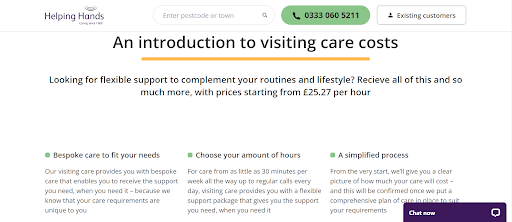
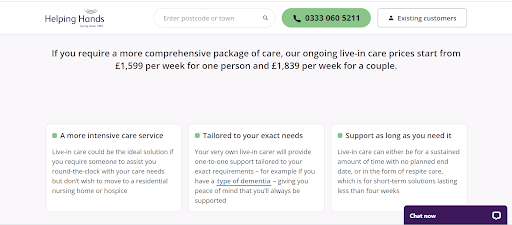
Helping Hand accepts direct payments and is always upfront about the total cost, helping build trust and transparency with clients. With bespoke care plans and flexible support packages, you can find a service that fits both your schedule and your budget. Hourly visits start at £25.27 per hour. More comprehensive care that involves daily or overnight visits starts as low as £1,599 per week for one person and £1,839 for couples. Respite care is also available for £250 per day if you only need live-in care for a short period of time.
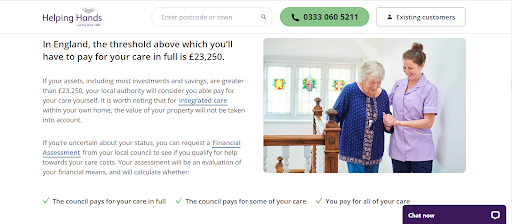
In England, the threshold above which you have to pay for your care is £23,250. What this means is that if your assets, investments, and savings exceed this amount, your local authority will assume you can pay for your in-home care yourself without assistance. The worth of your home or property isn’t calculated into this cost, but these factors should be considered when choosing the best care package for you or your loved one. If your assets don’t meet this £23,250 threshold, you can apply for financial assistance from your local council. There are three potential outcomes after your application has been submitted: the council pays for all of your care, the council pays for some of your care, or you don’t qualify and are required to pay for all of your care. Other state benefits may be available, so be sure to explore all of your options before choosing a payment method.
Most of Helping Hand’s clients are paying for their care out of pocket, which looks different for everyone. This is why Helping Hand’s care managers sit down with every family to create a payment plan and process that works for them.
Helping Hands Home Care Reviews from Patients and Loved Ones
Helping Hands has been offering in-home services for over 30 years, servicing patients and families across the UK and Wales. Out of 2,585 reviews on Trustpilot, Helping Hands has received a 4.8-star rating out of 5.
Here are what some real patients have to say about Helping Hand’s services, staff, and overall experience.
We firstly thank all those who visited my sister-in-law whilst we were away. The care was exceptional, and the staff were really helpful & friendly. I would recommend anyone needing care short or long-term to use Helping Hands. – Mr. Walker
Helping Hands has been brilliant. So professional & the best decision I made to care for my mom. Her relationship with her carer is so special. I’m kept informed at all times about any concerns or changes. All the staff are very helpful & polite & kind. Highly recommended. – Claire Holles
Having someone we can trust to look after a family member who suffers from dementia is a total relief and reassuring. This lifts a massive weight off our shoulders. I wouldn’t hesitate to recommend Helping Hands. Excellent care from the team! – Pete Thompson
If you have an elderly parent and need a professional/reliable service to support you, should you, like me, still wish to remain active in the provision of your parents’ care, then speak to Helping Hands. They really listen, and the carers are the best. – son of Tony Leigh Iris
My Carer is excellent at her job. She is punctual, polite, and needs the minimum of instruction to carry out her allotted task. – David Daby
Find the Help You Need with Helping Hands Home Care
Ageing in place is an important, personal decision for many seniors. Whether you’re facing a major health issue, are recovering from surgery, or were recently diagnosed with dementia, Helping Hands has specialized, highly-trained caregivers ready to create bespoke care plans to fit your unique needs and preferences. From around-the-clock care to hourly visits, Helping Hands offers both physical assistance and emotional support for older adults and their loved ones.
Learn more here and explore other home care options in your area on Compare Caring.
 Previous
