


Marketing your care business is difficult. The word ‘sales’ can sometimes be a negative term in the care sector due the sensitive nature of service you are delivering. Bringing on new customers however is a critical element of your businesses survival. So, how do we sell without being ‘salesy’?. Getting a solid pipeline of new Service Users can be expensive and complex. On the Service User’s side, choosing a care provider is a hard decision and full of potential pitfalls. Choosing a provider that has a positive reputation, treats its patients with dignity and respect, and charges reasonable rates is no mean feat especially given that there are numerous providers to choose from.
Because Service Users take this decision so seriously, care providers need to adopt a tactful marketing approach that helps you stand out from the competition and shows not only compassion but also a high level of care, knowledge, and
experience. If you’re a care provider looking for new and effective ways to market your business and get new Service Users, this article is for you.
Keep reading for 15 care provider marketing tips that will help generate more new Service User enquiries, showcase your business in the best possible light, and earn both the respect and trust of your Service Users.
1. Register on Lead Generation Sites
One of the best and most effective investments for care providers in the UK is registering with Service User referral platforms like Compare Caring. This lets potential Service User search for providers based on location, budget, services, and overall needs. Most Service User referral platforms are free for customers to use but charge the care providers themselves fees depending on their type of membership.
View this as an investment in your business as you gain access to more Service User’s contact information (including phone numbers and email addresses), and added exposure in the local area.
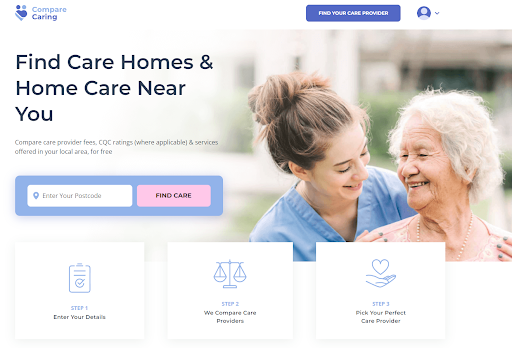
Being included on these comparison sites is imperative for competing with other local care providers. Be sure to showcase all of your best attributes and services, including staff qualifications, amenities, affordable pricing, CQC ratings and anything that helps your care business be unique or different from others in your area.
2. Invest in Paid Advertisements
There’s nothing wrong with paying for leads and exposure, which is where paid advertisements come into play. From Google Ads and pay-per-click Facebook ads to paper advert placement, there are plenty of opportunities to market your care business and get leads/referrals. Keep in mind, though, that each method requires its own unique approach and budget.
Two of the most popular and effective paid ads for care providers are Google Ads and Facebook. Both marketing opportunities offer their own unique benefits. Here’s a quick look at each.
Google Ads
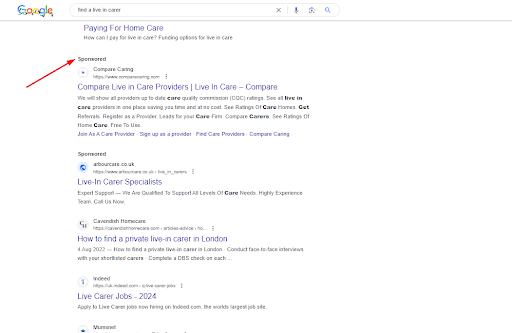
When you search for a word or phrase on Google, the first four results are paid advertisements. These websites (including care providers) aren’t ranking based on organic searches (more on this below) but, instead, because the business paid for their website to rank higher on the results page than their competitors. You can tell these websites apart as they have a ‘sponsored’ heading above the description (see below). These sites could be yours! Every time someone clicks on your advertisement, you pay, which is why these ads are also known as pay-per-click.
To take advantage of these paid campaigns, you need to create a Google AdWords account, which can be done in a few easy steps. It’s also important to note that the success of these ad campaigns weighs heavily on the chosen keyword. Choose a keyword with a high search volume but a low cost per click.
Facebook Ads
With billions of users, utilizing the popularity and reach of Facebook when deciding how to get leads for your care business is a must. Facebook ads offer budget controls, which is a great way to monitor your advertising spending. Set reasonable daily limits on how much you want to spend. If the ads are effective, you can increase this limit later on.
Facebook ads also let you target a specific audience and demographic, which is extremely useful when marketing your care home facility or business. You want to target older individuals who may need a care provider in the near future or grown children searching for a care provider for their aging parents or relatives. Facebook lets you choose the age, occupation, gender, and hobbies of your target audience, as well as the location, to create a highly targeted campaign that yields valuable results.
3. Consider Website Optimization
Gaining more clicks and traffic to your website is only one piece of the puzzle. Once visitors get there, you need to ensure they have a worthwhile experience. This means optimizing your website, including the layout, how fast the pages load, and the overall design and functionality. It’s also important to make a positive first impression. Be sure that visitors are met with a clean, professional, and strategically designed website that makes it easy to locate the information they need.
A responsive website will adjust to the user’s screen, whether they’re searching on a laptop, tablet, or mobile device. Always include helpful information that offers value to the Service User. Potential Service Users can see right through a pushy sales campaign that focuses more on making money than offering tangible advice. This is especially true when discussing care providers where the Service Users health and best interests are at stake.
Be sure to combine both written information via a blog and visual resources, including photos and videos. Navigation should also be simple. If it takes too long for the visitor to find the information they need, chances are, they’ll leave your site and head over to your competition, whose website is more user-friendly.
4. Utilise the Power of Content Marketing
Content marketing is an important tip when deciding how to get new Service Users. The Internet exploded with the phrase, “content is king,” in the late 90s thanks to Microsoft founder Bill Gates, who predicted the rise of content as a valuable marketing tool.
The written word is a powerful resource when marketing your care business. This usually comes in the form of blog posts and other informative articles. Include informational text, including advice, guides, resources, and tips and tricks. These can include topics like “How to choose a quality home care provider” or “What to look for in a quality care home facility.” Offering beneficial information without asking for anything in return is a great way to gain your client’s trust and build brand awareness.
Other forms of branded content to consider include videos, photos, and podcasts. You should also consider guest blogging on other care home or healthcare-related websites. By providing valuable content on these platforms and including a link to your own website (back links), you not only increase your visibility and drive more traffic to your business, but you also take another important step toward becoming an authority within the home care industry.
5. Develop Targeted Email Campaigns
Most people think social media is the way to go when tackling care business marketing. And while this is an important tool (see more below), targeted email campaigns are an underrated and underappreciated marketing technique that has the potential to yield big results. According to one study, targeted email campaigns are as much as 40% more effective than social media posts.
A few key things to consider when creating email campaigns for your care business are the subject, the content, the frequency, and the timing. The subject of your email should have a sense of immediacy that compels people to open it. Once you get over this hurdle, the content in your email needs to keep them around. Keep your marketing emails brief, direct, and include a benefit or perk that clients will receive if they follow through with your CTA (call to action).
Timing and frequency are also important when using emails to get care home leads. Studies show that emails are most likely to be opened between 9 AM and 12 PM and 12 PM to 3 PM. This is when people are frequently online and checking their inboxes. In terms of frequency, you don’t want to bombard potential leads with emails, but you also want to remain relevant. Try sending promotional emails between 10 and 19 times per month. According to industry experts, this is the ideal frequency for small businesses looking to gain traction and more leads.
6. Collect Positive Reviews and Testimonials
According to one survey, 84% of people trust online reviews as much as a personal recommendation. Collecting positive reviews from satisfied Service Users and their family members and posting heartfelt testimonials on your website help build your reputation and attract future clients. Don’t be afraid to ask Service Users and family members to leave positive reviews for you to incorporate into your marketing campaigns.
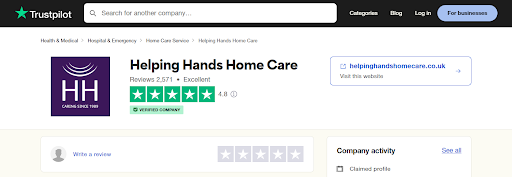
It’s also important to manage your current online reviews on Google and other review sites. Even the negative ones need addressing. Take the time (or hire someone) to manage your online reviews and ensure that your reputation remains intact. Always respond to negative reviews promptly and respectfully. Avoid getting defensive or engaging in an argument with a dissatisfied customer. This will ultimately reflect poorly on you, not them. Instead, apologize for their displeasure and offer to make things right if you can. The faster you address negative reviews, the less damage will be done.
It’s also important to acknowledge the positive reviews you receive. Thank your satisfied clients for taking the time to leave a review and extend your gratitude for their trust in you and your services. One study showed that 99.75% of people read online reviews. That means potential patients are sure to see the exchange between you and your clients, so be sure to keep it positive and professional.
7. Focus on SEO for your Care Business
Search engine optimization (SEO) is a vital aspect of any online marketing campaign, including getting new Service User enquiries for your care business. SEO focuses on organic search results, not paid ads like those mentioned above. That means your website will feature near the top of the organic search results, just below the paid ads.
Optimising your website means incorporating relevant and trending keywords, having a functioning website that loads quickly, and a mobile-friendly design. You also need to stay up to date on Google algorithms, which are constantly changing. Pay close attention to what Google places the most importance on and adjust your website and SEO efforts accordingly. Doing so increases the likelihood that your care home website will achieve the best position in the organic search results.
8. Network Within the Community
Making a name for yourself within the local community is a huge plus when getting new leads for your care business. Especially if your business covers specific geographical regions. Aging adults and their family members often want a provider that’s near the Service User’s home. This makes visitation easy and also helps the Service User feel comfortable and less displaced.
Attend local events and join community outreach programs where you can network with other providers while also meeting and mingling with potential clients. Putting a face to your business is a key factor in building brand awareness and gaining trust. This is a crucial part of any healthcare profession, where most patients make their decisions based on their comfort level and the emotional connection they feel with a facility, its staff, and other professionals. You can also organize your own events to promote your care home business, foster relationships, and get involved in the local community. A good example of a care provider networking event is the Hertfordshire Care Providers Association (HCPA). See if your county has something similar you can join.
9. Create and Distribute Brochures and Leaflets
As important as digital marketing is for generating leads in the care home industry, there’s still a use for promotional materials. Printing brochures, leaflets and business cards for your care business is a great way to immerse yourself in the local community and stay at the forefront of your client’s minds.

Design and print colorful, informative leaflets that feature high-quality photos of your facility. Be sure to include pictures of patients engaged in activities, interacting with one another, and smiling. Also, add plenty of bullet points and details about the types of services you offer, the qualifications of your staff, and pricing. Your contact information (including your phone number, address, and email) should be clear and visible somewhere on the brochure. Hand these tangible items out at community events and ask local businesses if you can leave a few leaflets or business cards on their counter. The more exposure and visibility your home care business gets, the more likely you are to generate interest and leads.
10. Host Virtual Events and Tours (for Care Home providers)
Not all potential patients can visit your care home in person. This is especially true if their loved one lives in a different location or isn’t in good enough health to travel. Hosting virtual events and tours is a great way to expand your target market and attract clients from outside your local area.
Location is a major factor for customers when choosing the best care home for themselves or their loved ones. Show off your facility, the amenities and accommodations, and your staff. Create an interactive experience by hosting real-time tours where potential clients have the opportunity to ask questions and engage with you and your staff.
11. Offer In-Person Tours and Trial Periods (for Care Home Providers)
Some potential patients aren’t comfortable making such a big decision about their healthcare over a computer screen, tablet, or phone. Offering in-person tours for prospective patients is a must when considering care home marketing. You can offer scheduled tours where clients get one-on-one attention from designated members of the staff. This adds a personal touch to your facility and also represents a high level of care.
Schedule these tours at times that work best for your staff, patients, and schedule. Show potential patients the facilities they’ll have access to, including private rooms, the cafeteria, outside amenities, and rec rooms. Provide a schedule of events, trips, and menus. You can also offer open houses where groups of potential clients can visit the facility on their own time. Consider limiting these tours to a certain number of guests so that you don’t overwhelm your staff or interfere with your patients’ schedules or comfort.
Some care homes also offer clients trial periods to see if the facility provides the level of care they want and need. If you can do so, consider giving interested patients a two-week trial period for a lower cost.
12. Highlight Newsworthy Moments
No one likes to brag, but that doesn’t mean your achievements should go unnoticed or unrecognised. If your care business has received notable awards or recognition for its high quality of service, scream it from the rooftops! You should be proud of your accomplishments, and there’s nothing wrong with advertising these achievements tactfully and modestly.
Did your care business recently win an award, or did your staff complete an important training? Add these facts to your website and include them in your company’s newsletter if you have one (and you should!). Keep current and prospective Service Users up to date on things like hiring new staff, opening new buildings, or adding new services. All of these announcements help create a positive buzz around your care business. Press releases are another great way to notify your target audience about the good things you have going on. It also gives them an inside look at what makes your care business special.
13. Hire Lead Management Services
Figuring out how to get leads for your care business is only half the battle. Once you acquire them, you need to manage them. That means offering responsive service, personalized advice, and a level of care you can be proud of. Following up on leads is another integral part of succeeding in the care industry. Lead management services can help you convert leads into Service Users and long-term clients.
Some lead management companies also help you fine-tune your sales funnel and marketing approach. By analysing data, results, and ad campaigns, lead management services can help you make the most out of your marketing efforts and budget properly. They can also help you tailor your marketing approach to reach the largest demographic and engage with the most customers.
14. Create a Referral Program
Referrals are another great way to get leads and increase enrollment for your care business. When you deliver the highest quality care at affordable prices and have qualified staff who are invested in their work, it’s not hard to ask for referrals. You may even receive referrals based solely on the level of care you provide.
One way to capitalise on these leads and gain more business through word of mouth is to create a referral program. This program would apply to existing patients and their families. Offer unique incentives like free perks, rewards, or other discounts on monthly fees for every new patient they refer. Referral programs are a highly effective marketing tool for care businesses since many new clients are more apt to trust a friend or loved one who gives them a referral than they are a stranger online.
15. Engage on Social Media
Last, but certainly not least, on this list of 15 care home marketing tips for generating more leads is to utilise the social media market. From Facebook and Instagram to Twitter and LinkedIn, social media is a treasure trove of potential Service User’s just waiting to see your post, story, or ad.
But simply creating accounts and posting a few times a month isn’t enough. Succeeding with social media marketing is about being engaged and consistent. It takes hard work and dedication to gain a loyal following and stay relevant in the world of social media.
You can also make valuable connections on professional social media apps like LinkedIn and Twitter. Keep the lines of communication open by responding to private messages and comments on your posts, posting reels, and using relevant hashtags. Do some marketing research to find out what platforms your target audience uses most frequently. Most people searching for care providers are either senior citizens or the adult children of senior citizens. User-friendly social media apps like Facebook and Instagram are great places to start.
As mentioned above, Facebook is the best platform for targeting local audiences and specific demographics. LinkedIn is known for its networking opportunities and professionalism, making it another viable option for marketing your care business, getting leads, and finding new networking opportunities and relevant forums or groups. Social media is an important part of any successful marketing strategy and a great way to build credibility in the healthcare industry.
Take Advantage of These 15 Care Home Marketing Tips and Get More Leads
Getting leads/referrals/Service User enquiries, increasing brand awareness, and reaching your target demographic within the healthcare industry isn’t always an easy task. As a care provider, you not only have to attract and convert new leads into paying Service Users, but you need to gain the trust of the person receiving the care and their family members.
Choosing a care provider is a big decision in most people’s lives. By adopting some of these care business marketing tips, you can get the most out of your promotional campaigns. You’ll also benefit from engaging with your target audience on a more personal level and generating more leads that help your business grow and earn you recognition as a trusted authority in the industry.
 Previous
